À propos de Thomas Constantinesco

Thomas Constantinesco is Professor of American Literature at Sorbonne Université, He also taught at Université Paris Diderot, the University of Oxford, and Yale University. He is an honorary junior member of the Institut Universitaire de France and a former Marie Skłodowska-Curie Fellow. His research interests lie in the fields of nineteenth-century American literature, literature and philosophy, literature and history, and medical humanities. He is the author of Ralph Waldo Emerson : l’Amérique à l’essai (Éditions Rue d'Ulm, 2012) and Writing Pain in the Nineteenth-Century United States (Oxford University Press, 2022), as well as several essays and book chapters on the Transcendentalists, Edgar Allan Poe, Herman Melville, Henry James, and William James. He also translated works by Emerson, Thoreau, Melville, James, Washington Irving, Mark Twain, and H. P. Lovecraft into French.

Friday 9 October 2026, 2 pm, Sorbonne Université / Zoom: Justyna Fruzińska (University of Lodz) & Anna Shmatenko (Sorbonne Université): Hawthorne’s Masculinities: Bodies, Power, and Society (Bibliothèque de l’UFR d’études anglophones)

A Zoom link is available here.

Meeting ID de réunion: 444 302 9120
Password: 73957

Justyna Fruzińska (University of Lodz): Models of Masculinity in Nathaniel Hawthorne’s Prose

Abstract: The paper will focus on the representation of male characters in Nathaniel Hawthorne’s prose in the context of nineteenth-century normative models of masculinity. I will compare Hawthorne’s men with the cultural expectations of the era, which included heteronormativity, Jacksonian individualism, emotional self-control, and what I term the double requirement of male sociality: compulsory homosociality (a concept developed in the context of 19th-century American writers by David Greven) and imperative participation in the public life. Given that almost none of Hawthorne’s male characters meet these criteria, I will examine whether they are represented as failing in their manliness, or whether the writer promotes a different, more subversive model of masculinity challenging 19th‑century norms.
zdjęcie pracownika

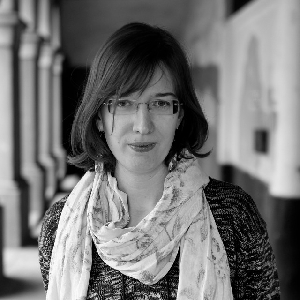
Justyna Fruzińska is Associate Professor at the University of Lodz, Poland, where she teaches courses on American literature, culture, and history. Her publications include Nineteenth-Century Visions of Race: British Travel Writing about America (2022) and Emerson Goes to the Movies: Individualism in Walt Disney Company’s Post-1989 Animated Films (2014) as well as articles on American popular culture, Transcendentalism, travel writing, and Polish poetry. She serves as Topic Editor for Text Matters: A Journal of Literature, Theory and Culture, and is part of the editorial team of Polish Journal for American Studies. She is a graduate of the Institute of Jewish Studies Paideia in Stockholm as well as a member of the Association for Cultural Studies, British Association of Nineteenth-Century Americanists, and Polish Association for American Studies.

Anna Shamtenko (Sorbonne Université): Anatomy and Masculinity in Nathaniel Hawthorne’s “The Birthmark”

Abstract: Surgery and dissection are omnipresent in Nathaniel Hawthorne’s “The Birthmark,” despite the fact that barely any touching actually takes place between the tale’s physician and patient figures. Yet, through Aylmer’s, the protagonist’s, deployment of the medical gaze, every instance of looking and speech-utterance in the text participates in something akin to a touch-free dissection, gradually cadaverising Georgiana, his wife and figurative patient, long before her death. I will argue that Aylmer’s anatomical excavations of his wife’s flesh are implicated in an Enlightenment project of racial cleansing, which starts with Georgiana’s eponymous birthmark being framed as a lesion of disease that bears many names, among which the most concerning are death, femininity, and racial otherness. Yet, instead of endorsing this project, I will argue that the tale, in all its subtlety, actually executes a critique thereof. The text repeatedly hints at the fact that the real fatal illness that festers therein is not Georgiana’s birthmark but the white male scientist’s phobia of embodiment. In the talk, I will attempt to demonstrate that it is this monomaniacal obsession with discorporation and racial purity that produces a “defect” on Georgiana’s face where there was none before, leaving Aylmer preoccupied with their collective failure to attain the summit of whiteness’ racial and gender aesthetics.

Anna Shmatenko is a third-year PhD student at Sorbonne University. Her research focuses on liminal states between life and death in the literature and medical archives of the nineteenth-century United States. She has published an article in Transatlantica on material spectres in Elizabeth Stuart Phelps’ The Gates Ajar and has an upcoming chapter on the disabled body in the works of Nathaniel Hawthorne, which will be published as part of the “Intercalaires” collection with Nanterre University Press. She also gave a paper at the International Poe and Hawthorne Conference in Paris in July 2025.

Friday, March 22, 2-4 pm: Paulin Ismard nous parlera de son nouveau livre, Le Miroir d’Oedipe: Penser l’esclavage (The Mirror of Oedipus: Thinking About Slavery) (Seuil, 2023) (UPCité / Zoom)

Report // Paulin Ismard, Le Miroir d’Oedipe: Penser l’esclavage, 22 March 2024

Le séminaire A19 (LARCA UMR 8225, Université Paris Cité/ VALE EA, Sorbonne Université) est très heureux de vous convier à une séance autour du livre de Paulin Ismard, Le Miroir d’Œdipe : Penser l’esclavage (Seuil, 2023) intitulée « L’insu. Penser l’esclavage depuis la Grèce ancienne.” Elle se tiendra le 22 mars à 14h en salle 830 (bâtiment Olympe de Gouges, Université Paris Cité) et en Zoom (lien disponible ci-dessous).

Paulin Ismard est Professeur d’histoire grecque à l’université Aix-Marseille.

En espérant vous y retrouver,

Bien cordialement,

Cécile et Thomas

Cécile Roudeau (Université Paris Cité, LARCA, UMR 8225)

Thomas Constantinesco (Sorbonne Université, VALE, UR 4085)

Sujet: A19- Paulin Ismard
Heure: 22 mars 2024 01:30 PM Paris


Wednesday, 27 March, 5:30-7pm: Michael Boyden (Radboud University), “Choleraic Communication in the Nineteenth-Century Culture of Invalidism” (Sorbonne Université, English Department Library, Salle Louis Bonnerot, Esc. G, 2nd floor / Zoom)

Report // Michael Boyden, “Choleraic Communication in the Nineteenth-Century Culture of Invalidism,” 27 March 2024

The bacteriological revolution of the late nineteenth-century gave rise to a “new language of immunity” (Anderson), substituting for the earlier discourses of acclimatization that had been dominant up until that point. Not only did this new language of immunity articulate new modes of being in the world and forms of governmentality, it also generated new narrative models and tropes, such as that of the “healthy carrier” and similar “gothic” figures as analyzed by, among others, Priscilla Wald and Neel Ahuja. As these scholars acknowledge, however, the bacteriological revolution did not so much reject as reconfigure earlier doctrines of environmental and climatic determinism, which continued to inform understandings of disease transmission even as the focus shifted away from sanitation toward discrete pathogens or microbes. In my talk, I aim to contribute to a more historically differentiated account of such “outbreak” narratives by focusing attention on the autoethnography of American tropical health travelers at the time of the second cholera epidemic of 1832. Since this epidemic reached the American mainland before it arrived in the Spanish islands, its trajectory challenged the moralized geography according to which such communicable diseases were perceived, just as the Caribbean was developing into a health resort for northern invalids seeking a climate cure for their illnesses. These tensions run through the memoirs of American invalids residing in the region, such as Sophia Peabody and Ralph Waldo Emerson’s brother Edward. In my talk, I explore how these and other tropical health travelers – who might be regarded as the inverse type of the “healthy carrier” as theorized by Wald, while in some ways prefiguring current understandings of environmental illness – at once challenged and reconfirmed climate-based understandings of the world before the introduction of the germ theory of disease. My presentation, thus, is an attempt to rethink the ways in which we conventionally narrate and periodize the history of epidemic disease in terms of its causes (from demons, to miasmas, to germs).

Michael Boyden is a professor of English at Radboud University Nijmegen, the Netherlands. His research is primarily in American literature, with a special interest in ecocriticism, Anthropocene studies, and critical sustainability studies. Boyden is the author, among other things, Climate and the Picturesque in the American Tropics (Oxford University Press, 2022), which tracks the genesis of the modern, future-oriented understanding of climate in travel writings coming out of the American tropics in the period 1770-1860. Boyden is also the editor of a collected volume titled Climate and American Literature (Cambridge University Press, 2021). This book brings together contributions by leading scholars in the fieldfocusing specifically on the ways in which the climate has left its mark on American literary culture from the colonial period up to the present. Boyden has also published on topics including environmental illness, climate fiction, futurism, and Indigeneity.

Friday, March 1, 2-4 pm: One hour on Mary E. Wilkins Freeman. Emma Thiébaut (LARCA), “Beyond Genus and Genre: the (Nonsense) Politics of Animality in the Life and Works of M.E.W. Freeman,” joint seminar A19 / Mary E. Wilkins Freeman Society (Zoom only)

For decades of her life, the then-very popular author of regionalist fiction Mary E. Wilkins Freeman (1852-1930) lived with a childhood friend, Mary Wales, and quite a few cats. In this paper, I wish to paint a very peculiar family portrait of a queer and interspecies mess. While little remains of what Freeman may have said about Mary Wales, or about her possible romantic affection for other women, the twenty-first century reader can read the love she expressed for cats, most notably in an interview she gave to Helen M. Winslow for the Saint Nicholas magazine in 1900, in her letters to editor Mary Louise Booth, and in two unexpected cat stories, “An Object of Love” (1885), and “The Little Persian Princess’ (1892). These texts, I argue, reveal queer affects by weaving together interspecies love and queer coupling or queer desire, and serving for Freeman as a space of experimentation for the expression and identification of feelings and affective identities. Because little evidence of Freeman’s feelings outside of fiction remains, I will be using what Pamela VanHaitsma has called “gossip methodology”, a tool of critical imagination that she uses in order to make up for the aching void that scholars are often confronted with when researching queer and feminist archives. And of course, this interplay between fiction and non-fiction, this semi-biographical interest, inspired by such studies as those of Melissa J. Homestead, will be furthered and yet also mitigated by an attempt to replace Freeman within late nineteenth-century romantic culture, which will allow me to demonstrate how Freeman’s texts espouse romantic discourse and, at the same time, queer it.


Wed. Jan 24, 6pm (ONLINE): Fourth Edith Wharton Birthday Talk. Prof. Gary Totten (University of Nevada, Las Vegas): “Edith Wharton’s Geographical Imagination: Notesfrom the Travel Writing”

The Edith Wharton Society is thrilled to join forces with the Transatlantic Literary Women (TLW) to host the fourth Edith Wharton Birthday Talk. This year, Professor Gary Totten (University of Nevada, Las Vegas) will be the speaker.

Gary Totten is a renowned Wharton scholar, a Past President of the Edith Wharton Society and the Theodore Dreiser Society, and the current Editor-in-Chief of MELUS: Multi-Ethnic Literature of the United States. His work has made a true mark not only on Wharton studies but also on studies of material culture, travel writing, ethnicity and race in American literature and culture. He is the author of African American Travel Narratives from Abroad: Mobility and Cultural Work in the Age of Jim Crow (2015), coeditor of Politics, Identity, and Mobility in Travel Writing (2015), and editor of Memorial Boxes and Guarded Interiors: Edith Wharton and Material Culture (2007). His most recent edited book Companion to the Multiethnic Literature of the United States (Wiley-Blackwell) is forthcoming in 2024. He is currently the volume editor for Volume 9: Travel Writings of the series The Complete Works of Edith Wharton, from Oxford UP. 

Gary’s talk, titled ‘Edith Wharton’s Geographical Imagination: Notes from the Travel Writing,’ will reflect on the synergies of natural and built environments, and the animating force of such settings for Wharton’s characters in the island biomes of the Aegean, the verdant hills and valleys of Italy and France, and the deserts and oases of Morocco. In his talk, Gary will reflect on Wharton’s travel narratives to unpack how the combination of her geographical sensibility and mobility as a traveler produces a cultural vision reflecting the privileges of her race and class while also offering insights into women’s travel experiences and compelling moments of engagement with and understanding of the natural world. 

Details and Zoom link:

https://transatlanticladies.wordpress.com/2023/11/21/january-tea-with-tlw-joint-birthday-event-with-the-edith-wharton-society-professor-gary-totten-on-edith-whartons-geographical-imagination-notes-from-the-travel-writing/

Friday, Feb. 2, 2pm (B20, Institut Catholique de Paris, 74, rue de Vaugirard, 75006 / Zoom). Julien Nègre (ENS de Lyon) : « Petites baies et Indiens morts : l’environnement de Thoreau » (joint seminar A19 / Environmental Humanities @LARCA, « humanités et questions environnementales » @ICP)

Report // Julien Nègre, “Cute Berries and Dead Indians: Thoreau’s Environment,” 2 February 2024

Julien Nègre (ENS-Lyon) will give a talk provisionally titled “Cute Berries and Dead Indians: Thoreau’s Environment.” Michael Jonik (University of Sussex) will be respondent. 

We will look at 3 excerpts in particular (attached): 

  • Wild Fruits, the “European Cranberry” section (3 pages) in which Thoreau formulates a theory of the excursion and of its epistemological, sensory and political value;
  • Two passages from Thoreau’s journal in which he visits his friend Daniel Ricketson in New Bedford and interacts with Native Americans: Oct, 1855 (page 5 of the PDF) and June, 1856 (pp. 16-17 of the PDF).

“Wild Fruits illustrates Thoreau’s naturalist outlook in the 1850s, at the crossroads between environmental concerns and political redefinition of the occupation of space and time. This intervention will contrast a passage from Wild Fruits with Thoreau’s cartographic archives found recently and linked to his Indian notebooks. “

THOREAU-WildFruits-EuropeanCranberry

THOREAU-Journal-Oct1855

THOREAU-Journal-June1856


Thursday, 18 January, 4 pm – 6 pm, UP Cité, OdG 164 / Zoom. A conversation with U.S. writer Laird Hunt (co-organized with IMAGER, UPEC)

Report // Laird Hunt, 18 January 2024

The session (co-organized by Anne-Laure Tissut [LARCA/ERIAC] and Anne-Julie Debare [UPEC, IMAGER]) will focus on Hunt’s novel Neverhome (Little, Brown, 2015), about a woman-soldier who dressed up as a man to go to fight in the Civil War. Hunt’s most recent novel, Zorrie (Bloomsbury, 2021), inspired by Gustave Flaubert’s « Un Cœur Simple », will also be part of the discussion, as well as the historical vein tapped in Hunt’s more recent work, which he calls « the Dark America Quartet ». Its specific form of realism blends with poetic invention and an elaborate play on structures which links it with Hunt’s earlier, more visibly experimental work. Moving back to the early times of the colonies and the hardships imposed on women especially by a strict Puritan doctrine (In the House in the Dark of the Woods, 2019), Hunt’s work also portrays slavery (Kind One, 2012), the Civil War (Neverhome 2014), and lynching (The Evening Road 2017). All those novels are first person narratives, staging women’s voices.

Questions may include Hunt’s fictional (re-)writing of history, writing and memory, genres and voices, the literary representations of trauma, the international influences, and the part played in his writing by the practice of translation.

Two excerpts of Neverhome (download below) will also give us the opportunity for some close reading.

The seminar will be followed by a reading at Atout Livre, 203 bis avenue Daumesnil, Paris, 12th arrondissement.

01 – Neverhome – First Chapters

02 – Neverhome – Greenhouses of memory

Friday, 8 December, 2pm, Bibliothèque d’anglais, Sorbonne Université / Zoom: Stephen Rachman (Michigan State), “Pathoregimes: Poe, Pestilence, Space and Time.”

Report // Stephen Rachman, “Pathoregimes: Poe, Pestilence, Space and Time,” 8 December 2023

Sari Altschuler (Northeastern) will be respondent.

This session will take place at Sorbonne Université, Bibliothèque de l’UFR d’études anglophones (esc. G, 2è étage; entrée par le 54 rue Saint Jacques ou le 17 rue de la Sorbonne, 75005 Paris).

Abstract: This paper examines space and time in the writings of Edgar Allan Poe that deal with pandemic disease. Recent studies of Poe in relation to place (e.g. Philip Phillips and Kennedy and McGann) have concentrated on contextualizing Poe’s oeuvre in terms of its human geographies, how places and spaces are manifested in his works, and how those works can be, in turn, mapped and re-mapped on to fictive, historical, actual, and imaginative locations. The ongoing pandemic has sensitized us anew to the ways in which Poe used cultural geography under the spatio-temporal pressures of epidemic disease. This essay will focus on the London of Poe’s “King Pest” and how it functions as a plague-induced interzone, an epicenter of epidemic disease. Through this analysis, the essay will demonstrate how miasmatic theories of pestilence drive the human geography in this story, as Poe’s language fixates upon local concentrations of loathsome decaying organic matter believed to be producing deadly disease. The essay will conclude with an examination of what Poe’s pestilential spatial logic has to teach us about modern pandemics and the meanings that pandemics produce.

Stephen Rachman is Director of the American Studies Program and Co-Director of the Digital Humanities and Literary Cognition Laboratory at Michigan State University.

He is the editor of The Hasheesh Eater by Fitz-Hugh Ludlow (Rutgers University Press). He is a co-author of the award-winning Cholera, Chloroform, and the Science of Medicine: A Life of John Snow (Oxford University Press) and the co-editor of The American Face of Edgar Allan Poe (Johns Hopkins University Press). He has written numerous articles on Poe, literature and medicine, cities, popular culture, and an award-winning Web site on Sunday school books for the Library of Congress American Memory Project. He is a past president of the Poe Studies Association and currently completing a study of Poe entitled The Jingle Man: Edgar Allan Poe and the Problems of Culture.


Friday, June 8, 2023, 2pm: Günter Leypoldt (Heidelberg): “Literary Networks and the Laureate Position in the Long Nineteenth Century”, Université Paris Cité, Olympe de Gouges building, room 830 / Zoom

“Literary Networks and the Laureate Position in the Long Nineteenth Century”


This lecture looks at literary prestige from the perspective of a new theory of value. It argues that today’s system of literary prizes has evolved from an older socio-institutional formation that I will call the “laureate position” in cultural space. The first part will explore how the laureate position turns literary artifacts into strong-valued “higher goods” (as opposed to, say, quotidian entertainment practices) that dominate the making of “literary heritage.” Relevant issues will be how laureate-oriented authorship connects to regimes of “vocation,” “singularity” and peer-review. The second part will look at how the making of literary prestige crystallizes long-standing tensions between the laureate position’s professional curators and the problem brokers of the civil sphere (the former concerned with defining literature as a higher good, the latter with civil-sacred notions of good democratic behavior or “moral decency”). Examples will be drawn from nineteenth-century debates on the status of the novel and what can count as capital-L-literature.


Günter Leypoldt is a Professor of American Literature and Culture at the University of Heidelberg, Germany, and speaker of the Research Training Group “Authority and Trust in the US” at Heidelberg Center for American Studies. His present research interests include transatlantic Anglophone literature from 1800 to the present, cultural theory, book history, and the sociology of aesthetic experience and knowledge production. He is the author of Cultural Authority in the Age of Whitman: A Transatlantic Perspective (2009), editor of Intellectual Authority and Literary Culture in the US, 1790-1900 (2013), and co-editor of American Cultural Icons (2010), Reading Practices (2015), and Authority and Trust in US Culture and Society (2021). His essays appeared in such journals as American Literary History, Modern Language Quarterly, New Literary History, American Journal of Cultural Sociology, Critical Quarterly, Contemporary Literature, and Post45.

Friday, 10 February, 2pm, Jamie Fenton, “When Persons Become Supposed: Emily Dickinson and the American Civil War”

When I state myself, as the Representative of the Verse — it does not mean — me — but a supposed person. Emily Dickinson to Thomas Wentworth Higginson, July 1862.

Emily Dickinson sent this cryptic statement to her mentor, Thomas Wentworth Higginson, as the United States entered its second year of civil war. This paper aims to decode the statement, by paying special attention to that innocuous word ‘supposed’. What is a ‘supposed’ person? How does Dickinson go about supposing them? What lives do they live in verse? The paper will offer two routes through this problem. First it will investigate Dickinson’s interest in dramatic monologue. Her poems have attracted the label of lyric, but this is not a truth inherent, and we should be confident in pursuing their relationship with other modes. If a supposed person is something like a character, how far are Dickinson’s poems from those of her heroes, Robert and Elizabeth Barrett Browning? The second route is towards the Civil War. Dickinson wrote this letter to a Higginson away at war, where she feared he had become ‘impossible’. This part of the paper will argue that ‘supposing’ was a necessary talent for civilians waiting for news of combatant relatives or friends: with no guarantee of survival, soldiers had to be imagined alive. This kind of supposing found its way into Dickinson’s poems in the voices of soldiers. The paper will end by trying to draw the two routes together, proposing, via an encounter with Shakespeare, that Dickinson’s poems can be read as the monologues of impossible people.
 
Jamie Fenton began his education at Jesus College, Cambridge, where he completed a BA in English and MPhil in American Literature, before moving on to an AHRC-funded PhD at Pembroke College, Cambridge, which he finished in 2021. In early 2020, he held a Kluge Fellowship at the Library of Congress, Washington, D.C. In 2021-2022, he held a postdoctoral fellowship at University College London. His research interest is American Literature, especially the literature of the American Civil War. He practices a historical-formalist mode of close reading, which aims to work out how style emerges from and then thinks about its political and cultural environment. His PhD investigated a series of Civil War poets, including Walt Whitman, Herman Melville, Laura Redden, Emily Dickinson, and Paul Laurence Dunbar. He has also written on Woody Guthrie, Henry David Thoreau, and the contemporary poet Erica Dawson.
 
Photograph of Jamie Fenton

Friday, January 27, 2pm, Todd Carmody, “Work Requirements: Literary Labour and Social Welfare”

Work Requirements

Throughout the history of the United States, work-based social welfare practices have served to affirm the moral value of work. In the late nineteenth century this representational project came to be mediated by the printed word with the emergence of industrial print technologies, the expansion of literacy, and the rise of professionalization. In Work Requirements (Duke UP, 2022), Todd Carmody asks how work, even the most debasing or unproductive labor, came to be seen as inherently meaningful during this era. He explores how the print culture of social welfare—produced by public administrators, by economic planners, by social scientists, and in literature and the arts—tasked people on the social and economic margins, specifically racial minorities, incarcerated people, and people with disabilities, with shoring up the fundamental dignity of work as such. He also outlines how disability itself became a tool of social discipline, defined by bureaucratized institutions as the inability to work. By interrogating the representational effort necessary to make work seem inherently meaningful, Carmody ultimately reveals a forgotten history of competing efforts to think social belonging beyond or even without work.

Todd Carmody is a writer, researcher, and strategy consultant in New York and a visiting scholar at Harvard University’s W.E.B. Du Bois Research Institute.

J. Michelle COGHLAN (Manchester): “Devouring New England: the Matter of Mary E. Wilkins Freeman’s Culinary Regionalism”. Seminar “À Table!” (VALE/A19) / 10 November 2022, 5:30-7pm, Sorbonne Université, Bibliothèque de l’UFR d’études anglopohones

J. Michelle Coghlan is a Senior Lecturer in American Literature and Director of the Programme in American Studies at the University of Manchester, UK. She is the author of Sensational Internationalism: the Paris Commune and the Remapping of American Memory in the Long Nineteenth Century (Edinburgh UP, 2016), which was awarded the 2017 Arthur Miller Centre First Book Prize in American Studies, and editor of The Cambridge Companion to Literature and Food (Cambridge UP, 2020). She is currently at work on two projects: Louise Michel in America, forthcoming from Rutgers UP, explores Michel’s expansive influence on late-nineteenth-century American woman radicals and the wider fascination she held for Americans of various political persuasions and Culinary Designs aims to chronicle the making of American taste in the long nineteenth century; in Spring 2023, she will be guest-editing the “Radical Henry James” special issue of The Henry James Review.

https://www.research.manchester.ac.uk/portal/j.michelle.coghlan.html

“What Does Literature Feel Like?” / 7 October 2022, 2pm-6pm

 
 Thomas Constantinesco (Sorbonne Université):”Introduction: What Does Literature Feel Like?”
 
Édouard Marsoin (Université Paris Cité): “Touching Whiteness in Moby-Dick“
 
Adeline Chevrier-Bosseau (Sorbonne Université): “Snowblind: Embodying inarticulated affect in Cathy Marston’s choreographic translation of Ethan Frome“
 
Erica Fretwell (SUNY Albany): “Sensitivity Training”
 
Q & A